


Pre-Harvest Grain System Checks: Make Sure Your Equipment Is Ready Before the First Load Arrives


When harvest starts, you need your grain system ready to work.
The middle of harvest isn't the time to discover a conveyor isn't tracking correctly, a slide gate won't open, a dryer safety control isn't functioning, or a bearing starts running hot.
Spring maintenance gives you time to handle repairs and larger projects. A pre-harvest grain system check serves a different purpose: making sure the equipment you've maintained is actually ready to operate as a complete system.
At RidgeTop Farm Supply Inc., we help farmers throughout Northeast Missouri, Southern Iowa, and Eastern Illinois prepare their grain handling, drying, and storage systems for harvest. Before the first load comes out of the field, here are several areas worth checking.
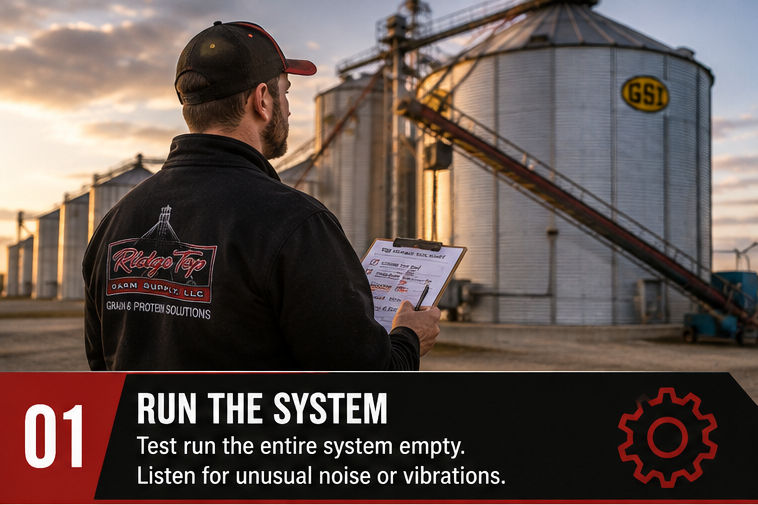
Start With a Complete System Test Run
Individual components may work correctly on their own, but harvest depends on those components working together.
Before the season begins, safely test the grain handling system according to manufacturer procedures and applicable safety requirements.
Run the System Empty
Where appropriate for your equipment, operate the system empty before introducing grain.
Starting with an empty system gives you an opportunity to observe equipment operation and identify obvious problems without having grain moving through every component.
Watch the equipment and pay attention to how it sounds.
After months of limited use, a test run can reveal problems that weren't obvious during a visual inspection.
Listen for Unusual Noises and Vibrations
You know what your equipment normally sounds like.
Grinding, squealing, knocking, rattling, or excessive vibration deserves attention. Those symptoms may indicate that a component needs inspection before being placed under a full harvest load.
Don't ignore a new sound simply because the equipment is still running.
Check Motors and Bearings
Motors and bearings are critical to keeping grain moving.
During an appropriate test, look for signs that components are operating abnormally. Excessive heat, unusual vibration, noise, or other changes from normal operation should be investigated.
Finding a questionable bearing now is much better than finding it when trucks are lined up.
Verify Start and Stop Functions
Test equipment controls to confirm components start and stop as intended.
That includes making sure the sequence of equipment operation works properly throughout the grain system.
When harvest gets busy, operators need controls to respond the way they expect them to.

Make Sure Grain Handling Equipment Is Ready to Move Grain
A grain system can contain multiple conveyors, grain legs, augers, gates, and spouting sections. One problem can affect everything upstream.
Before harvest, check how those components function together.
Confirm Conveyors and Grain Legs Operate Properly
Operate applicable conveyors and grain legs according to their normal procedures and confirm they are functioning correctly.
Pay attention to belts, drives, bearings, buckets, and other components you've inspected during earlier maintenance.
A spring inspection identifies wear. The pre-harvest test confirms that the repaired and maintained equipment is ready for operation.
Test Reversing Systems
If your equipment includes reversing capabilities, test those systems before harvest.
Make sure operators understand how they're intended to work and when they should—or shouldn't—be used.
The goal is to know your equipment functions before you need that feature.
Check Spouting for Restrictions
Grain needs a clear path through the system.
Inspect accessible spouting and related components for conditions that could cause plugging or restrict grain movement.
Problems inside the flow path can reduce capacity and turn an otherwise well-designed grain system into a bottleneck.
Check Slide Gates
Test slide gates to make sure they open and close smoothly and operate as intended.
A gate that sticks when the system is empty probably isn't going to become easier to operate once harvest is underway.
Check Aeration and Airflow
Once grain reaches the bin, maintaining appropriate storage conditions becomes the next priority.
Your aeration system needs to be ready too.
Confirm Airflow Where Appropriate
When there is grain in the bin and conditions allow for proper testing, operate the aeration fans and confirm that the system is producing the expected airflow.
Do not use this test on an empty bin if the fan or system manufacturer advises against operating the equipment under those conditions. Follow the manufacturer's procedures for your particular equipment.
Look for Airflow Problems
Check applicable ducts, transitions, fans, and other aeration components for restrictions or conditions that could interfere with airflow.
If airflow appears noticeably different from what you expect, determine why before depending on the system for stored-grain management.
Verify Temperature and Moisture Monitoring Equipment
If your bins use temperature or moisture monitoring equipment, verify that those systems are operating properly before you depend on their readings.
Monitoring systems can provide valuable information about stored grain, but only when sensors, cables, controls, and displays are functioning correctly.

Test Electrical Systems and Controls
Today's grain systems depend on more than motors and mechanical equipment.
Controls, alarms, sensors, starters, relays, and other electrical components help coordinate the operation.
Before harvest, confirm that those systems are ready.
Check Alarms and Sensors
Test applicable alarms and sensors according to manufacturer procedures.
Operators should know what an alarm means and what action should be taken when it activates.
A warning system isn't much help if nobody knows whether it's working—or what it's trying to tell them.
Check Your Backup Systems
If your grain facility uses backup power, backup controls, or other redundant systems, verify that they're operational before harvest.
Backup equipment isn't something you want to test for the first time during an outage or equipment failure.
Make sure the appropriate people understand how backup systems operate and what procedures need to be followed.

Test Your Grain Dryer Before You Need It
A dryer problem can quickly become a harvest problem.
If wet grain is arriving faster than your dryer can operate—or the dryer can't run at all—the slowdown can affect the rest of the operation.
That's why your grain dryer should be tested before harvest, not for the first time when the first load of wet corn arrives.
Check Temperature Accuracy
Verify that temperature controls and monitoring systems are operating as expected according to the manufacturer's procedures.
Accurate temperature control is an important part of consistent dryer operation and grain-quality management.
Verify Safety Shutoffs
Dryer safety controls are there for a reason.
Test applicable safety shutoffs and controls according to the manufacturer's recommended procedures. If a safety device isn't operating correctly, address the problem before putting the dryer into harvest service.
Never bypass a safety control to keep equipment running.
Check Airflow and Burner Performance
Inspect the dryer for proper airflow and burner performance according to manufacturer recommendations.
Problems with fans, burners, fuel delivery, controls, or airflow can affect dryer operation and throughput.
RidgeTop sells, installs, services, repairs, and maintains various GSI grain dryers, so if something doesn't look or operate correctly during your pre-harvest test, our team can help get it ready.
Think About the Entire Grain System, Not Just Individual Equipment
One of the most important parts of a pre-harvest inspection is looking at the facility as a complete system.
Your grain leg might have plenty of capacity, but can the conveyor feeding it keep up?
Can your dryer handle the amount of wet grain you're planning to harvest?
Can grain move from the dryer to storage quickly enough?
Are your unloads, spouting, gates, controls, and electrical systems ready?
Harvest efficiency depends on how all of those pieces work together.
A single bottleneck can affect the capacity of the entire operation.
Don't Wait Until Harvest to Discover the Problem
There will always be things you can't predict.
But a failed test in August or September gives you something a breakdown during harvest doesn't:
time.
Time to diagnose the problem. Time to find replacement parts. Time to schedule a repair. Time to make an adjustment. And, if necessary, time to replace or upgrade equipment before you're depending on it every day.
That's the value of a pre-harvest grain system check.
You're not simply checking boxes on a maintenance list. You're giving the entire operation a chance to prove it's ready before harvest puts it under pressure.
Get Your Grain System Harvest-Ready With RidgeTop Farm Supply
RidgeTop Farm Supply Inc. provides grain-system inspections, preventative maintenance, service, repairs, replacement parts, equipment installation, and system updates for farmers throughout Northeast Missouri, Southern Iowa, and Eastern Illinois.
Our team works with complete grain systems, including:
Grain bins and storage systems
Grain dryers
Grain legs
Conveyors
Augers
Spouting
Unload systems
Aeration equipment
Material handling equipment
Controls and related equipment
Whether you need a final pre-harvest inspection, a repair, replacement parts, dryer service, or help solving a bottleneck in your grain handling system, RidgeTop is here to help.
The first load of harvest should test your crop—not your equipment. Contact RidgeTop Farm Supply before harvest to make sure your grain system is ready for the rush.
Safety Note: This article provides general educational and maintenance information. Always follow manufacturer instructions and applicable safety procedures. Equipment inspection, electrical work, repairs, and testing should be completed by qualified personnel where required. De-energize equipment and follow appropriate lockout/tagout procedures before servicing machinery.


Comments